Batumi’s edge, when it comes to real estate investing, is that demand, over the years, has steadily gone from depending on the summer tourist spike to a much steadier influx over the other seasons.
In 2025, Georgia recorded 5.8m international visitors (+7.0% y/y) and 5.5m tourist-type visits (+8.4% y/y). And while the bulk of inbound visits concentrated in Tbilisi (3.8m), Adjara was the second biggest destination with 2.7m visits. Visitors also stayed longer, for 5.6 nights on average (+1.6% y/y) and repeat travel was high (78.4%). These numbers matter when it comes to real-estate investment: especially the high percentage of repeat visitors shows that one can expect long-term commitment to pay off here.
The Batumi Real Estate Investment thesis works best with the blended ROI model:
- Price your base case on conservative occupancy;
- Let peak months lift blended returns;
- Keep execution risk low via fast, documented title/registration and professional operations.
If we speak numbers, prospective investors in real estate in Georgia should be particularly interested in the following: inbound visitors spent GEL 15.0bn in 2025 (+5.1% y/y) (avg GEL 2,187 per visit). Batumi apartment liquidity improved in 2025: in 3Q25, 4,893 apartments sold (+27.0% y/y), while Sep-25 average turnkey primary pricing reached $1,821/sqm (+9.0% y/y).
Is Batumi a good place to invest in real estate?
As of 2025 the answer is a resolute Yes. if you underwrite it as a demand-and-liquidity market, that is. In 2025, Adjara recorded 2.7m inbound visits, second only to the capital Tbilisi, and demonstrated it can support a notable rental base beyond the peak summer tourism months. The sales hit 4,893 units in 3Q, a +27.0% y/y), which clearly demonstrates that the investors currently have the ability to enter and later exit without much pain.
Why should foreign investors consider luxury apartments in Batumi, Georgia?
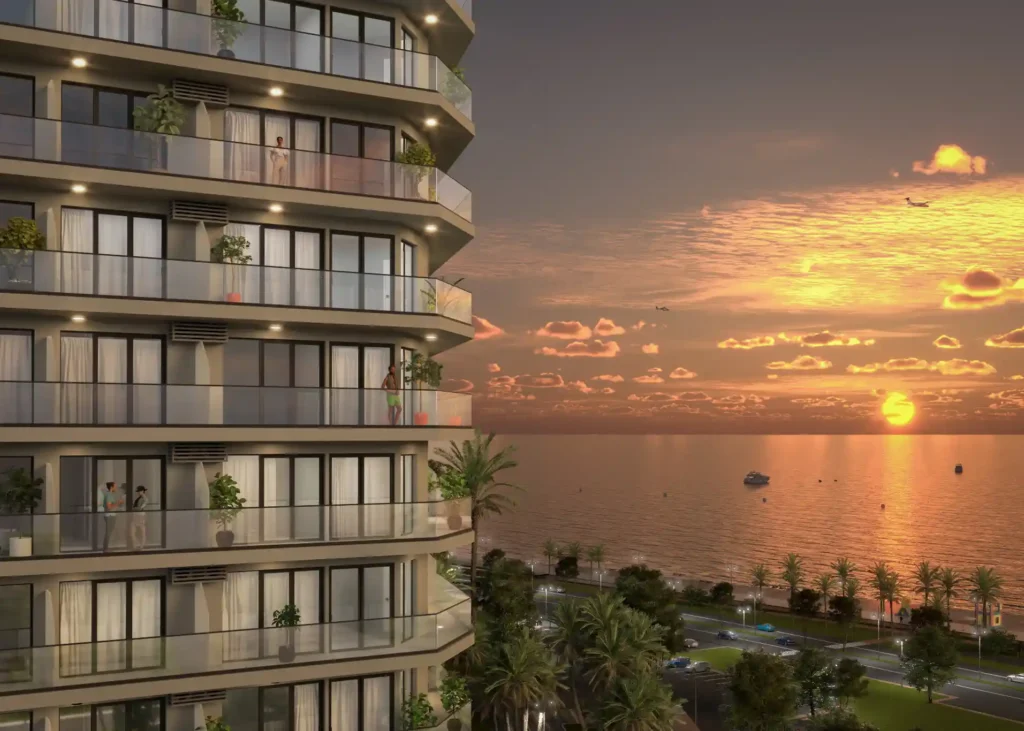
Luxury markers provide certain operational resilience. In Batumi’s hotel market, average 4Q25 occupancy was slightly up compared to 4Q24, with 50% vs 46%, and ADR at $75 – a clear demonstration that quality inventory can hold pricing even in the quieter times of the year.
When it comes to the residential market, these numbers translate nicely to prospective steady demand for short-term rentals – key for cross-border owners who’re looking to invest in Batumi for smoother passive real estate income.
What makes Batumi attractive for Gulf and Israeli investors?
Two things: measurable spending power and connectivity. In 2025, inbound visit expenditure reached GEL 15.0bn (with large shares in shopping, accommodation, and F&B), so the monetization possibilities are quite broad, not depending on a single segment.
On the tourism-revenue side, specifically, 4Q25 revenue growth was led by Israel (+37.0% y/y), and total 2025 tourism revenues were $4.7bn (+6.0% y/y), which helps explain why investors from Israel (and increasingly the Gulf) keep looking into Georgia as a possible second market to expand into.
Can foreigners buy property in Batumi, Georgia?
Yes, and they have to jump through significantly fewer legal hoops, compared to the rest of Europe. Pretty much the only restriction on buying real estate foreign buyers have to deal with is restriction on agricultural land. Other than that, they can generally purchase apartments and commercial premises without much trouble.
In practical terms, investor risk has little to do with the broad legal framework of the country, and almost everything with documentation. So, when purchasing a unit, verify title, encumbrances, and that the signed agreement matches what gets registered.
What is the rental yield for luxury apartments in Batumi?
As of right now, there’s no specific data covering luxury apartments separately. On-market yields are competitive by regional benchmarks. Galt & Taggart “Real Estate Trends in Batumi” report shows that in August 2025 Batumi rental yield was at 7.4%, which was higher than multiple Mediterranean peers in the same snapshot.
It’s reasonable to assume that the luxury segment, specifically, would perform in the range or, possibly, better.
What is the average ROI for luxury apartments in Batumi?
Galt & Taggart’s annual report showed rental yield in Batumi at ~7.4% by Aug-25. But the same report also shows that that’s a broad average covering the entire city: similar to Tbilisi apartments, the prices for Batumi apartments heavily depend on factors such as location, infrastructure, amenities, etc. In fact, they account for an average $400 per sq.m. difference between residential and investment apartment prices, with the price playing a rather large role in the yield compression down the line.
I.e. luxury can net more but also costs more. Success depends on the strategy and owner willingness to market their property. Investors can use market metrics as guardrails, but should model their own units, based off of it.
A grounded example using 2025 pricing/rent would look something like this: since Sep-25 primary turnkey pricing was $1,821/sqm, while Sep-25 weighted rent was $10.8/sqm, a 50 sqm unit is roughly $91k and ~$540/month gross rent (without taking vacancy/fees into account), i.e., ~7.1% gross annualized.
Is there a growing demand for luxury apartments in Batumi?
There’s a growing demand in all segments of Batumi real estate, and luxury certainly isn’t an exception. Demand is visible in both liquidity and foreign-buyer participation. In 3Q25, Batumi sales were 4,893 units (+27.0% y/y), and in Galt & Taggart’s survey of “systematic developers,” foreign buyers accounted for 77% of apartment sales in 2025 (with Israel accounting for 16% of the pie, and the Arab countries for further 7%). The numbers clearly show that despite the prices of property in Georgia climbing y/y, the buyer pool remains deep, both when it comes to entry and eventual resale.
How does seasonal tourism affect rental yields in Batumi?
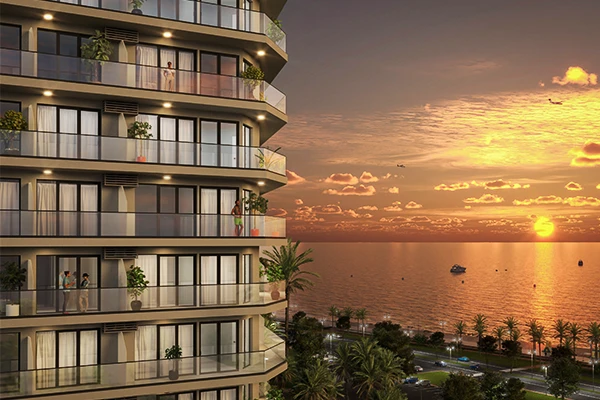
Seasonal demand in Batumi is still real (it is a seaside resort, after all), but 2025 data shows that the demand is becoming more spread out when it comes to strong assets. Batumi hotels posted 50% occupancy in 4Q25 (up from 4Q24), and national inbound data shows visitors stayed 5.6 nights on average with high repeat rates.
It’s clear that most in-demand properties can support reasonable shoulder-season and mid-term strategies, stabilize ROI by mixing peak nightly revenue with off-season mid-term rentals and pricing discipline.
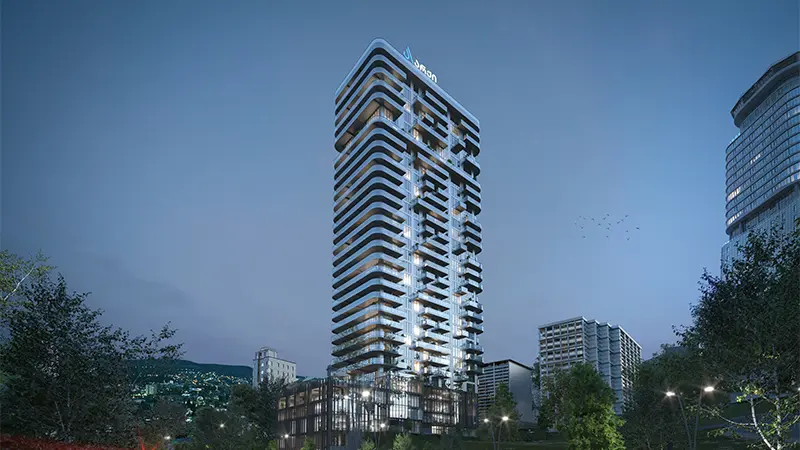
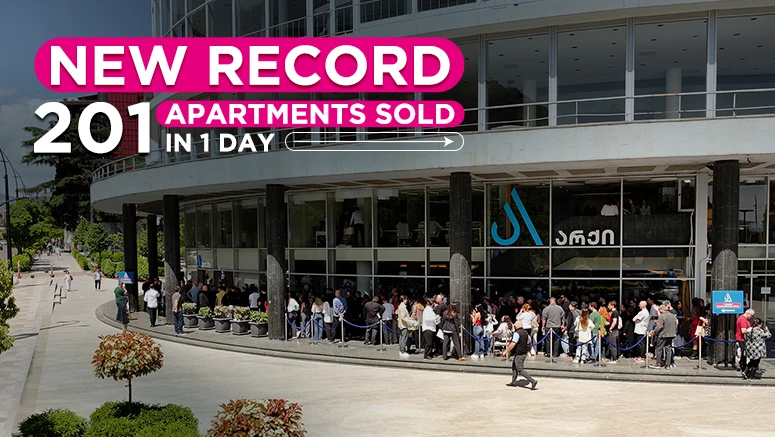
One way of maximizing the occupancy levels during shoulder or low season would be to leverage brand recognition: certain names hold more trust and come with certain expectations. Archi, for example, is one such name on the Georgian real estate market, with the Archi Batumi project showing consistent higher-than-average occupancy across the seasons. The second Archi project in Batumi, the aparthotel in partnership with the recognizable Ramada brand near the beach is also positioned particularly favorably for the current market.
What is the process for purchasing luxury apartments in Batumi as a foreigner?
The process of buying real estate in Georgia is pretty streamlined, it doesn’t matter whether you’re buying a regular unit on Tbilisi periphery or a luxury seaside condo in Batumi:
- Get in touch with a local lawyer specializing in real estate;
- Shortlist the projects and have the lawyer verify the property’s legal status (title/ownership, encumbrances like liens/mortgages, accuracy of the registered details) and whether the developer/seller has the right to sell;
- Make sure purchase agreement clearly states the exact property object, price/payment schedule, delivery/handover terms (for new builds), penalties for non-performance, and what documents you will receive at closing;
- Register the property after paying by filing the transaction for official registration for the ownership to be recorded under your name in the public registry.
Registration timelines and fees as published by NAPR: fees for registration of the creation/change/termination of a right on immovable property are 150 GEL (4 working days), 270 GEL (1 working day), or 350 GEL (same day).
Are there any restrictions on repatriating profits from Georgian real estate investments?
Georgia’s economic legal framework explicitly protects capital mobility: the Organic Law on Economic Freedom states it is inadmissible to restrict residents/non-residents regarding currency conversion and accounts, and affirms the right to export financial resources (with legal exceptions).
That said, banks will (and have the right) to demand proof that nothing shady is going on, so investors need to make sure they have a clean paper trail from day one. So that when the new property starts generating profit, they can move it about as they see fit.
What are the tax benefits for foreign real estate investors in Georgia?
Georgia provides a clear preferential framework for individuals renting out residential space for residential purposes: 5% income tax instead of 20%, provided the landlord is properly registered in the Revenue Service registry.
Important nuance for professional investors: short-term stays, bundled services, or commercial leasing can change tax treatment, so before actually investing lay out a clear path of how you intend to use the space. In fact, the more possible models you have on hand the better (this rings especially true for investors holding commercial property in Tbilisi, Georgia).
How does Batumi real estate compare to other investment destinations in the region?

Batumi competes on a specific mix: high-yield potential + improving liquidity + low execution friction. By Sep-25, turnkey primary pricing was $1,821/sqm (+9.0% y/y) and rents in key districts reached $11.2/sqm in Old Batumi (Sep-25).
What are the projected growth trends for Batumi’s luxury real estate market?
Investors can improve their positioning when making long-term decisions about investing in Batumi real estate if they continue tracking two indicators: connectivity and spend.
In 2025, Batumi airport served 840,893 passengers in 8M25 (+32% y/y), flight frequency rose 45%, and officials expected annual passenger traffic to exceed 1.2m for the first time. The data is supportive of what the Galt&Taggart report shows: there’s a steady inflow of travelers (and, along with them, demand) in Batumi – increasingly across non-tourist seasons, too. And with inbound spending reaching GEL 15.0bn in 2025, we can expect for the visitor economy to keep scaling in value, not just in headcount.